
Coffee · Packaging
Hessian Coffee Sacks for Export (Jute, Food-Grade)
60–69 kg Jute Coffee Sacks — Untreated, MOSH/MOAH-Compliant
Submit procurement requirement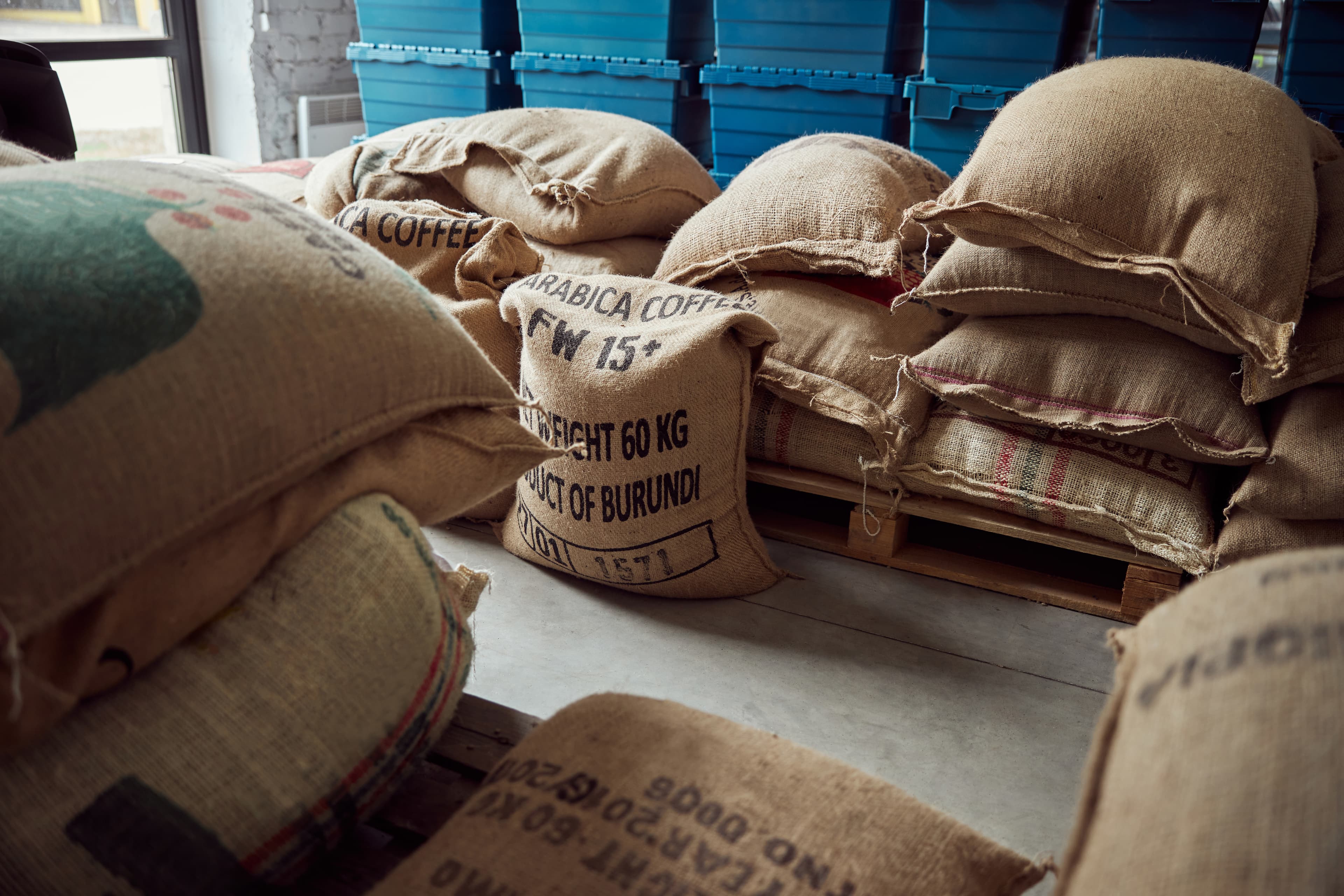
A rejected coffee shipment rarely fails on the bean. It fails on the bag. Our hessian coffee sacks are woven from untreated natural jute, produced without mineral-oil batching agents, and laboratory-testable for MOSH/MOAH — so contamination never becomes your buyer’s rejection at destination.
Hessian Coffee Sacks for Green Coffee Export — Technical & Compliance Overview
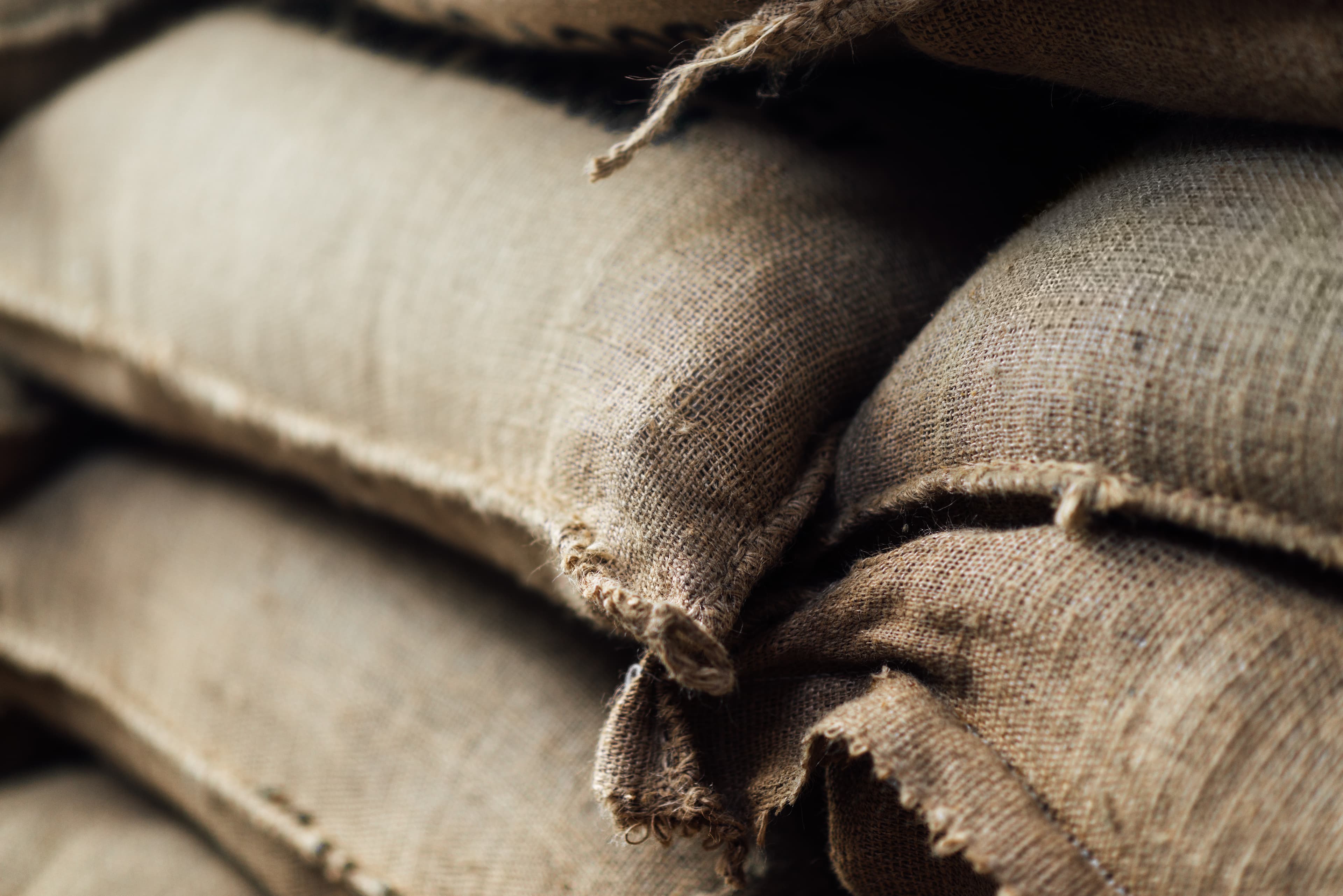
Hessian coffee sacks — also called burlap or jute coffee bags — remain the global standard for green coffee export because they combine breathability, stacking strength and compliance potential. But the same open weave that lets coffee breathe also lets contamination in. For high-value lots destined for regulated markets, an untreated, food-grade jute coffee bag is the difference between a clean arrival and a claim.
Our coffee export sacks are manufactured from natural jute fibre without chemical treatment, mineral-oil-based processing or synthetic additives. This removes the primary contamination pathway and supports compliance with EU and international food-safety regulation.
Untreated, MOSH/MOAH-Compliant Production
Mineral oil hydrocarbons (MOSH/MOAH) are the leading contamination risk in food-grade packaging. Conventional jute is softened with batching oils that can migrate straight into the bean — EFSA lists coffee among the commodities where MOAH is frequently found, and MOAH with three or more aromatic rings is treated as potentially genotoxic and carcinogenic. In 2026 the European Coffee Federation and European Cocoa Association published a joint specification replacing the 1998 IJO98/01 standard, setting direct MOSH and MOAH limits for jute bags in coffee and cocoa supply chains.
Our hessian coffee sacks are:
- Produced without mineral-oil-based batching agents
- Manufactured without chemical finishing treatments
- Aligned with the 2026 ECF/ECA food-contact jute specification
- Suitable for laboratory testing and independent third-party verification
This makes them appropriate for coffee shipments into the EU and other regulated markets.
Optimised for Green Coffee Transport & Container Loading
Green coffee is hygroscopic — it absorbs and releases moisture with every temperature swing during ocean freight, and cupping quality in permeable packaging declines measurably within months. The jute sack provides physical protection; a food-grade liner controls the atmosphere inside.
Technical advantages include:
- High breathability to reduce condensation and mould risk
- Strong seam construction for 60–69 kg coffee loads
- Optional GrainPro / HDPE hermetic liner for moisture and pest control
- Stable pallet and container stacking performance
- Suitable for FCL and consolidated LCL coffee shipments worldwide
Correct packaging protects against moisture damage, insect infestation, “baggy” off-flavours and export claims.
EUDR & Export Documentation Handled Before Production
Coffee is in scope of the EU Deforestation Regulation: buyers must prove beans were grown on land not deforested after 31 December 2020, backed by farm-level geolocation (GPS points or polygons). We structure this — and the rest of the paperwork — up front, not after the container has sailed. Every project is aligned on:
- Sack specifications (size, grammage, weave density, printing)
- MOSH/MOAH and food-contact documentation
- EUDR geolocation / traceability data per producing farm
- ICO Certificate of Origin and phytosanitary statements
- Incoterms structured correctly (FOB is the coffee-trade standard) and Bill of Lading preparation
This structured model gives you transparent, factory-level pricing and predictable lead times.
The Blue Stripes Explained
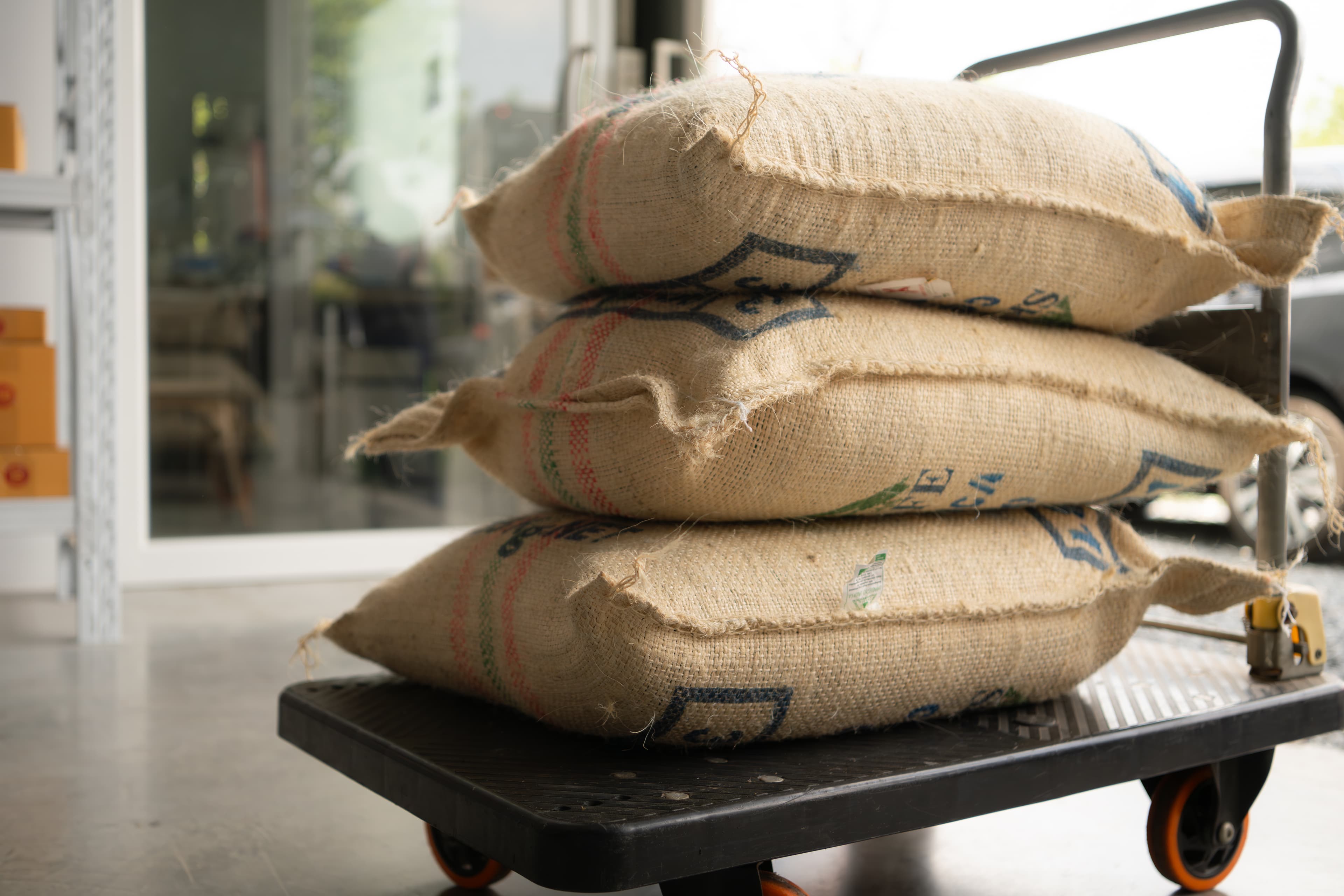
The three blue stripes are the traditional marking of the Binola / B-Twill export sack — the long-standing standard weave for coffee, cocoa and nuts. They identify the classic bag type; they are not a food-safety guarantee in themselves. Food-grade status comes from vegetable-oil treatment (VOT / hydrocarbon-free), not from the stripes. Stripe colour, stripe count and printing are fully customisable — plain, striped, or custom-branded to your specification.
Custom Jute Coffee Bags, Contracted at Factory Level
Factory-direct sourcing with payment made directly to the manufacturer or certified export house — full transparency, no hidden markups. Order plain hessian coffee sacks off standard specification, or custom jute coffee bags with your own print, stripes and grammage. You contract at production level while we manage compliance, structure and execution, with specific expertise in how green coffee must be packed, protected and transported for export.
What Happens After You Submit Your Coffee Sacks Requirement?
- 1
Specification & Technical Alignment
We review your requirements (weight, weave, liner, certification level, destination market, shipping terms) and refine specs to remove compliance or logistics risk before production.
- 2
Factory Confirmation & Compliance Verification
We confirm availability with the appropriate manufacturer or certified export house. MOSH/MOAH, food-contact and phytosanitary documentation is aligned before production starts.
- 3
Production & Quality Control
Production runs to agreed specification. Optional pre-shipment inspection and laboratory testing can be arranged prior to dispatch.
- 4
Export, Documentation & Delivery
We structure Incoterms correctly (FOB / CFR / CIF), prepare export documentation in advance to avoid destination delays, and keep full shipment visibility until goods are delivered.
Protect Coffee Quality From Origin to Port
Green coffee is sensitive to moisture, odour transfer and handling stress across a 30–45 day sea journey. Our untreated hessian coffee sacks are breathable and MOSH/MOAH-compliant, and take an optional hermetic liner to lock in a stable atmosphere — preventing condensation, mineral-oil contamination and structural failure during stacking. The result: preserved cup quality and reduced rejection risk at destination.
Coffee Export Bag Size & Weight (60–69 KG Standard)
| Size | 69 × 101 cm (27″ × 40″), sizes to spec |
| Capacity | 60 kg standard (70 kg used in some origins) |
| Empty weight | ± 1.1 kg per sack |
| Weave | Plain (hessian) or twill |
| Mouth | Hemmed mouth |
| Sewing | Two-side machine sewn + safety sewn |
| Stripes | Optional coloured stripes |
| Printing | Custom printing available |
| Inner liner | Optional (HDPE / GrainPro hermetic) |
| Testing | MOSH/MOAH lab test allowed |
Standard green-coffee export bags hold 60 kg (70 kg in some producing countries). Loading reference: 1 × 20ft ≈ 18–20 t, 1 × 40ft ≈ 28–30 t. Burlap coffee bags are available wholesale at production-run volumes.
Submit Procurement Requirement
We respond within one business day with factory availability, compliance documentation status, and indicative pricing.
Related sourcing