
Geotextile, contracted at production level
We are the sourcing department between you and the producer. Woven PP, non-woven PP and jute geotextile — one audited producer, one locked specification, the same fabric every container.
You buy at production price. The manufacturer pays our commission, not you.
- What we source
- Woven PP · Non-woven PP (needle-punched) · Jute woven (open weave) · Jute felt
- How it works
- Contracted at production level. No European warehouse, no broker between you and the source.
- Minimum order
- One 20 ft container
- Incoterms
- FOB · CIF · CFR
- Quotation
- Send your specification — we quote within two working days
- Documentation
- Spec sheet · CoA · pre-shipment inspection — with the B/L, not after it
- Who pays us
- The producer. There is no margin added on your side.
Why your geotextile changes between shipments
Most European buyers do not buy from a producer directly. They buy from a broker, and the broker changes suppliers between orders — whichever quotes lowest that month. The weight drifts. The weave drifts. The spec sheet, if there is one, describes what was woven last time.
You find out on site, when the fabric behaves differently than the last roll.
Three things go wrong, and it is the same three every time
- The supplier changes, so the fabric changes. Nobody tells you, because nobody is contractually obliged to.
- There is no locked specification. You receive what was produced that month, not what you ordered. "Approximately 500 gsm" is not a specification.
- Documentation follows the goods. Or it doesn't arrive at all, and you are the one explaining that to your client.
What contracting direct with the producer changes
- One audited producer. We inspect the facility before the first container ships, and we do not rotate between suppliers to chase a cheaper quote. The producer is named in your quotation.
- Specification locked in writing. Weight, weave, roll width, moisture, treatment. Agreed once, held every container.
- Pre-shipment inspection before the container leaves. Certificate of Analysis at origin, not a promise on arrival.
- Documentation travels with the bill of lading. Not after it.
We are the producer’s agent, not a trader
We hold no stock and we take no title to the goods. You buy at production price, on your own Incoterms, in your own name.
The manufacturer pays our commission. There is no margin added on your side.
Woven, non-woven, geogrid or jute — which one?
| Woven PP | Non-woven PP | Jute (woven / felt) | |
|---|---|---|---|
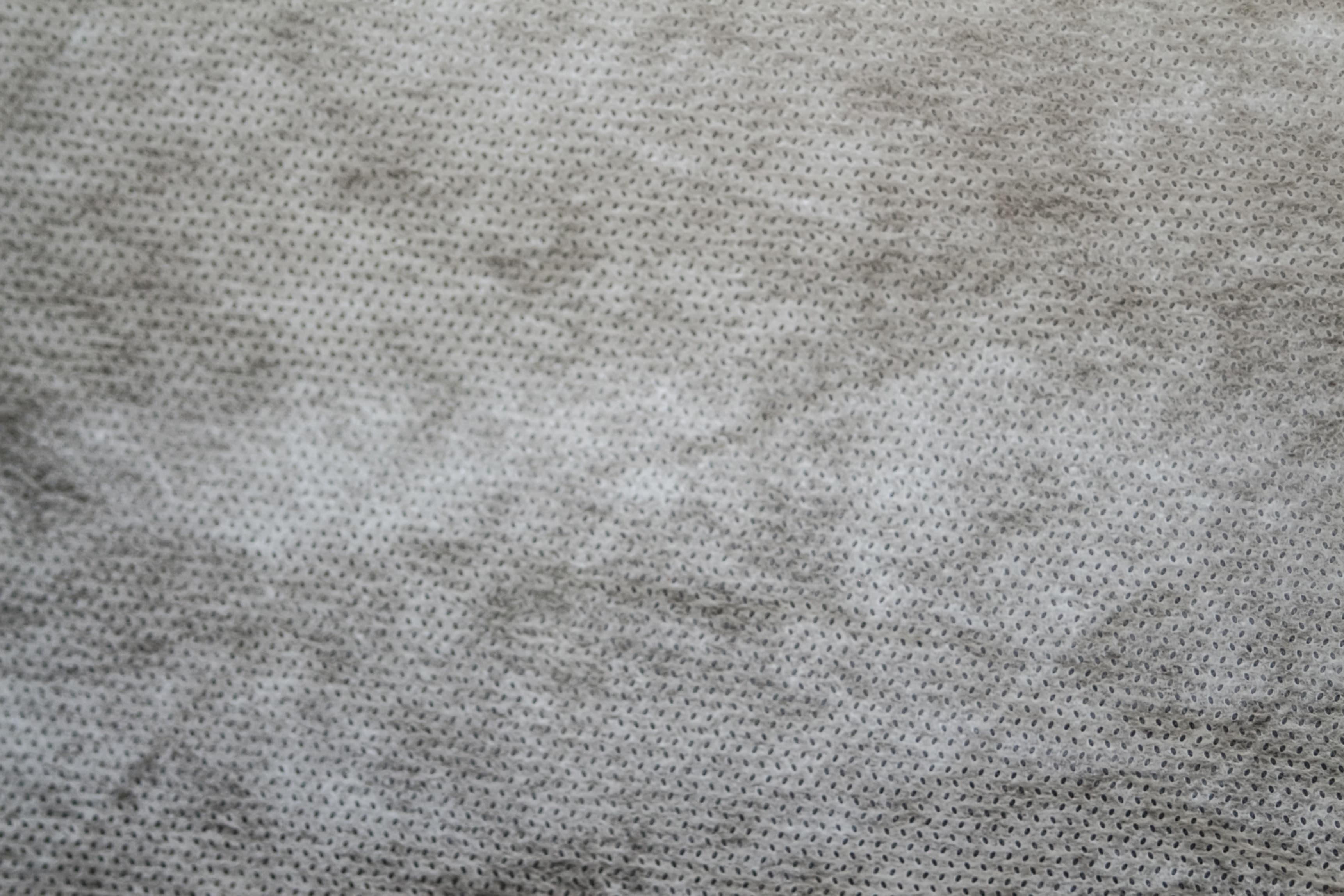
| Primary function | Separation, reinforcement | Filtration, drainage, protection | Temporary erosion control, revegetation |
| Tensile strength | High | Moderate | Moderate |
| Water flow through | Low | High | High |
| Service life | Permanent | Permanent | Temporary — then composts into the soil |
| Choose it when | The fabric has to carry load | The fabric has to let water through | Vegetation will establish and take over |
| Don't choose it when | You need drainage | You need tensile strength | You need a permanent structural function |
The question nobody asks you — do you need a permanent fabric at all?
A geotextile on a slope has one job: hold the soil until vegetation does. Once the roots are in, the fabric is redundant.
If that takes two growing seasons, a fabric engineered to last thirty years has spent twenty-eight of them as plastic in the ground.
On slope, bank and revegetation work, a biodegradable fabric is often not a compromise. It is the correct specification.
And where synthetic is genuinely better, we say so
Load-bearing separation under a haul road is not a jute application. Neither is permanent filtration behind a retaining wall, or anything with a design life measured in decades.
We will tell you that rather than sell you the wrong fabric. It is a short-term loss and a long-term relationship, and we would rather have the second one.
Geogrid and geomembrane are not geotextiles
Geogrid — a rigid mesh that reinforces soil through aperture interlock. Not a fabric. Different function, different failure mode.
Geomembrane — an impermeable barrier for containment. The functional opposite of a geotextile, which is permeable by design.
If someone is offering you a geotextile where a geogrid belongs, that is the point at which you should ask who they buy from.
What drives the price of geotextile
Anyone quoting you a price per square metre without asking for your specification is quoting you a fabric, not a solution. Five things move the number, and only one of them is the fabric itself.
Weight (GSM)
The single largest driver. Roughly speaking, doubling the weight doubles the material cost. Most over-specification happens here — heavier is not safer, it is just heavier.
Roll width
Standard widths are production widths. Non-standard widths cost more per square metre and waste more on site. Tell us the width of your slope and we will tell you which roll wastes least.
Treatment
Rot-proofing extends service life and adds cost. Whether you need it depends entirely on how long the fabric has to survive — and on most revegetation work, the answer is: not long.
Volume
One container and four containers are different conversations at production level. If you have annual volume, say so — it changes the quote.
Incoterm
FOB versus CIF is not a price difference. It is a risk and control difference, and choosing the wrong one costs more than the fabric.
What you are not paying for
No European warehouse. No stockholding cost baked into the square metre. No broker margin between you and the source.
You pay the producer. The producer pays us. That is the entire commercial structure, and we will put it in writing.
Getting an actual number
Send us your application, area, required service life and destination port. You get a factory quotation within two working days, with the producer named and the specification written down.
Not a range. Not “from €X”. A quote.
Geotextile for erosion control

A cut slope is vulnerable from the moment the machine leaves until the vegetation has rooted. That window is one to two growing seasons — not thirty years.
The fabric has to survive that window, hold seed and soil against rain and wind, and then get out of the way.
| Application | Fabric | Why |
|---|---|---|
| Slope & embankment protection | Jute open weave | Holds seed and soil through establishment; composts into humus |
| Riverbank, creek and ditch | Jute open weave, heavier grade | Holds under flow while roots take hold |
| Road and railway slopes | Jute open weave, or woven PP | Depends on whether the function is temporary or permanent |
| Wind erosion on exposed slopes | Jute open weave | Breaks surface wind, retains moisture at the seedbed |
| Mine and quarry reclamation | Jute open weave | Large areas, no maintenance access — the fabric has to disappear on its own |
How long does jute last in the ground?
Typically one to two years in soil contact, depending on climate, moisture and soil contact. It does not need to be removed and it does not need to be disposed of — it breaks down into humus that the vegetation uses.
That is not a limitation of the material. On this kind of work, it is the specification.
Biodegradable geotextile
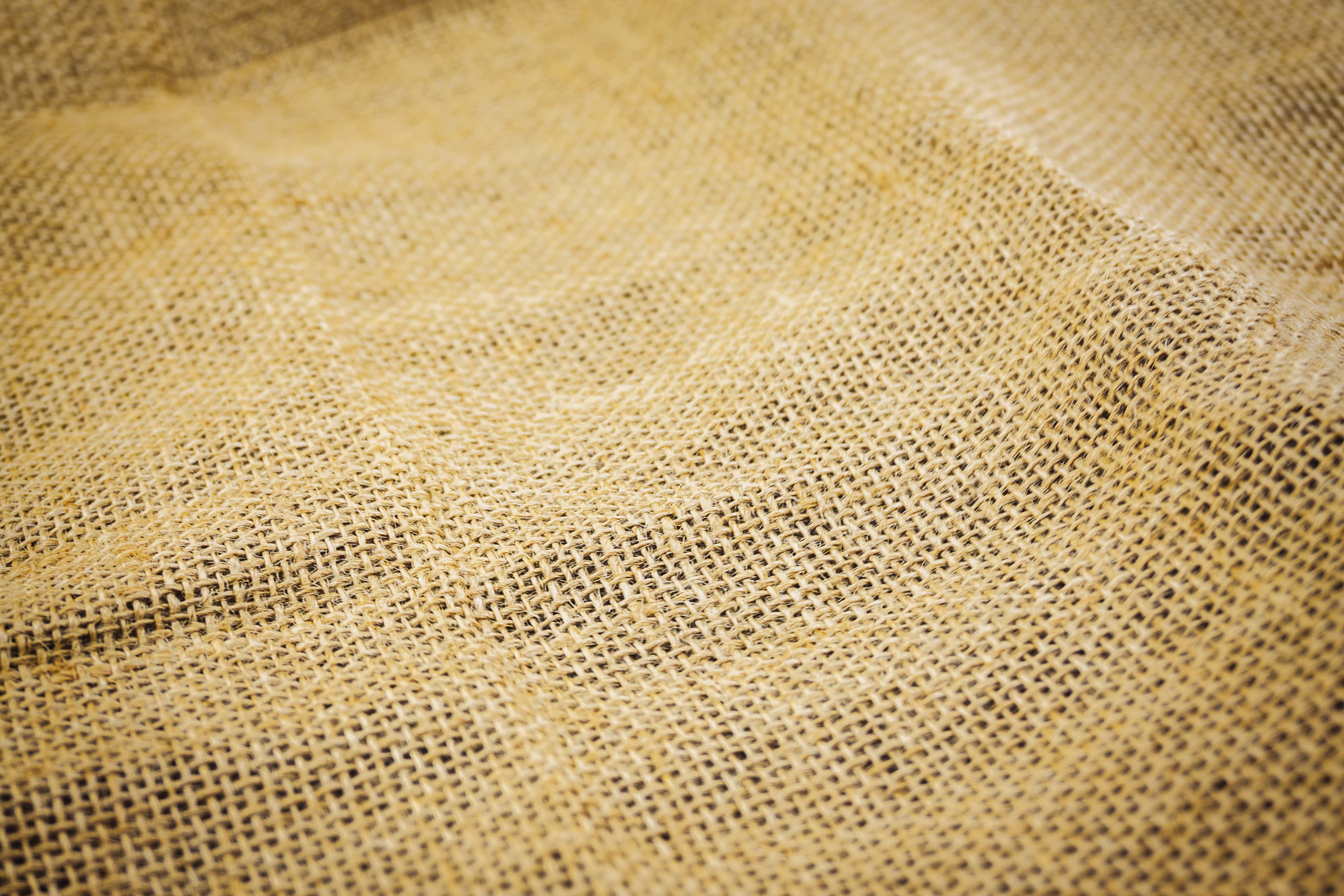
Jute geotextile is woven from natural bast fibre. It holds soil and seed while vegetation establishes, and then it composts into the ground it was protecting.
- Fully biodegradable — No microplastic residue in the soil, ever.
- Renewable — An annual crop, not a petrochemical.
- No removal cost — Nothing to lift, nothing to dispose of, no second mobilisation.
The honest limits
- Not for permanent structural function. If the fabric has to carry load or filter for decades, use PP. We will tell you so.
- Shorter service life. That is the point, but it has to match your programme. If vegetation will not establish in two seasons, jute is the wrong choice.
- Quality varies between producers. This is the real problem with natural fibre, and it is the entire reason this business exists. A jute fabric that is 20% under weight will fail on a slope that a correctly woven one would have held. That is not solved by finding a cheaper supplier. It is solved by not changing supplier.
Frequently asked questions
Send your specification
We will come back within two working days with a factory quotation, the producer named, and the specification written down.
Last updated: